
Emerging coastal ecosystems
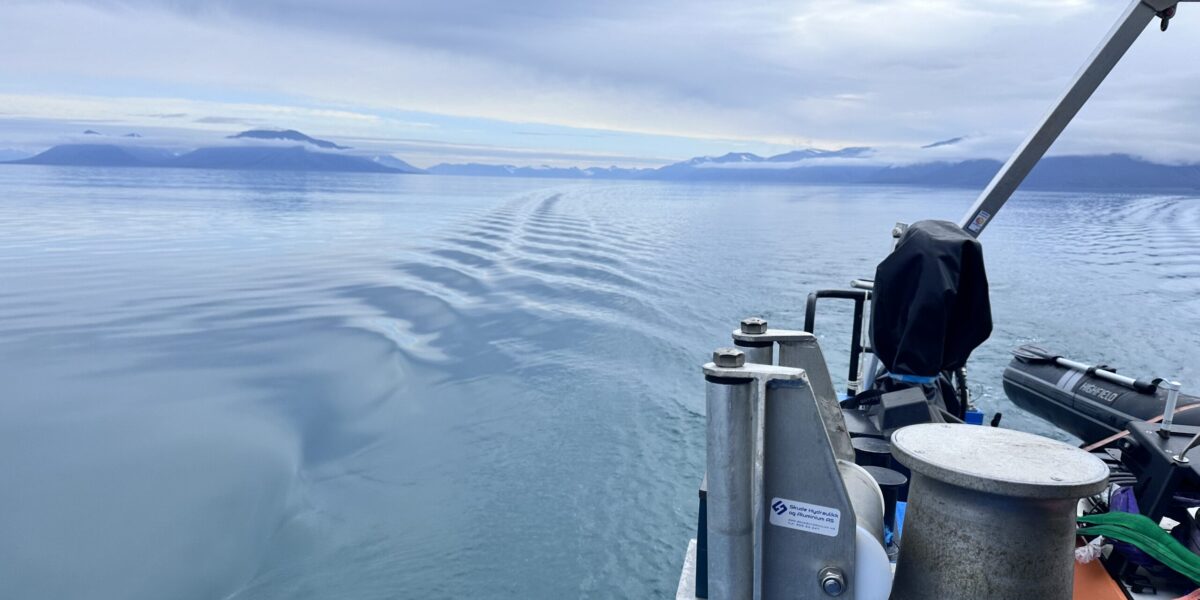
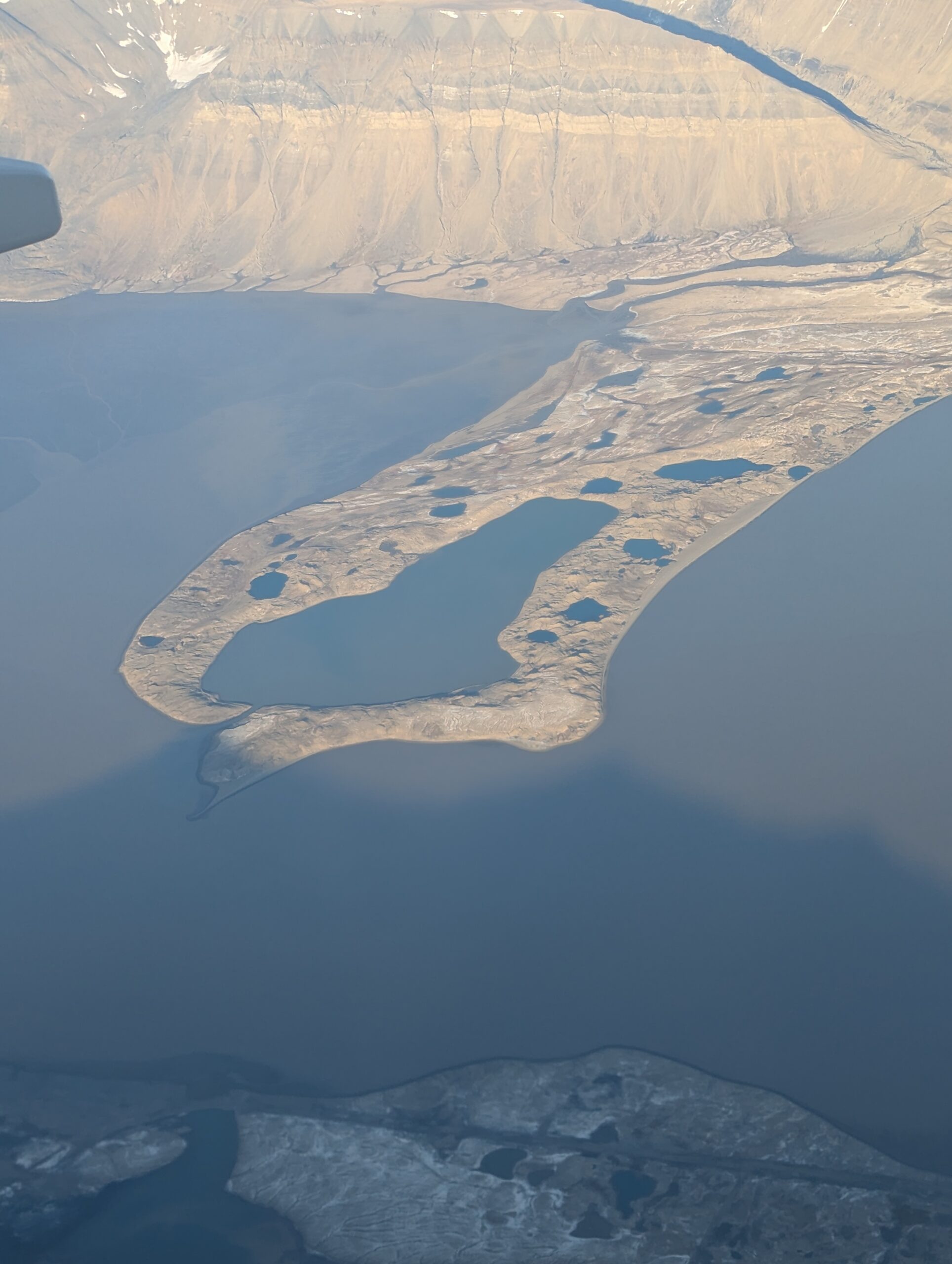
Across Svalbard, retreating glaciers are reshaping the coastline and creating new aquatic habitats at the boundary between land, ice and sea. Among them are paraglacial lagoons, shallow coastal systems influenced by glacial meltwater, terrestrial runoff and exchange with adjacent fjords.
These ecosystems are appearing and changing rapidly, yet we still know relatively little about how they function, what biodiversity they support, how connected they are to surrounding environments, or what role they may play in carbon, nutrient and contaminant cycling.
Our recent collaborative review in Frontiers in Marine Science highlights the scale of this emerging research challenge. More than 400 coastal lagoons have been identified across Svalbard, including almost 100 systems that have formed in recent decades. Rather than representing a single ecosystem type, they appear to form a continuum from young, strongly glacier-influenced basins to more established and biologically structured lagoons.
Understanding these systems matters because they may function as biodiversity hotspots, biogeochemical reactors, contaminant reservoirs or ecological stepping-stones as species redistribute through a warming Arctic. But answering these questions requires bringing physical, chemical and biological observations together rather than studying each component in isolation.
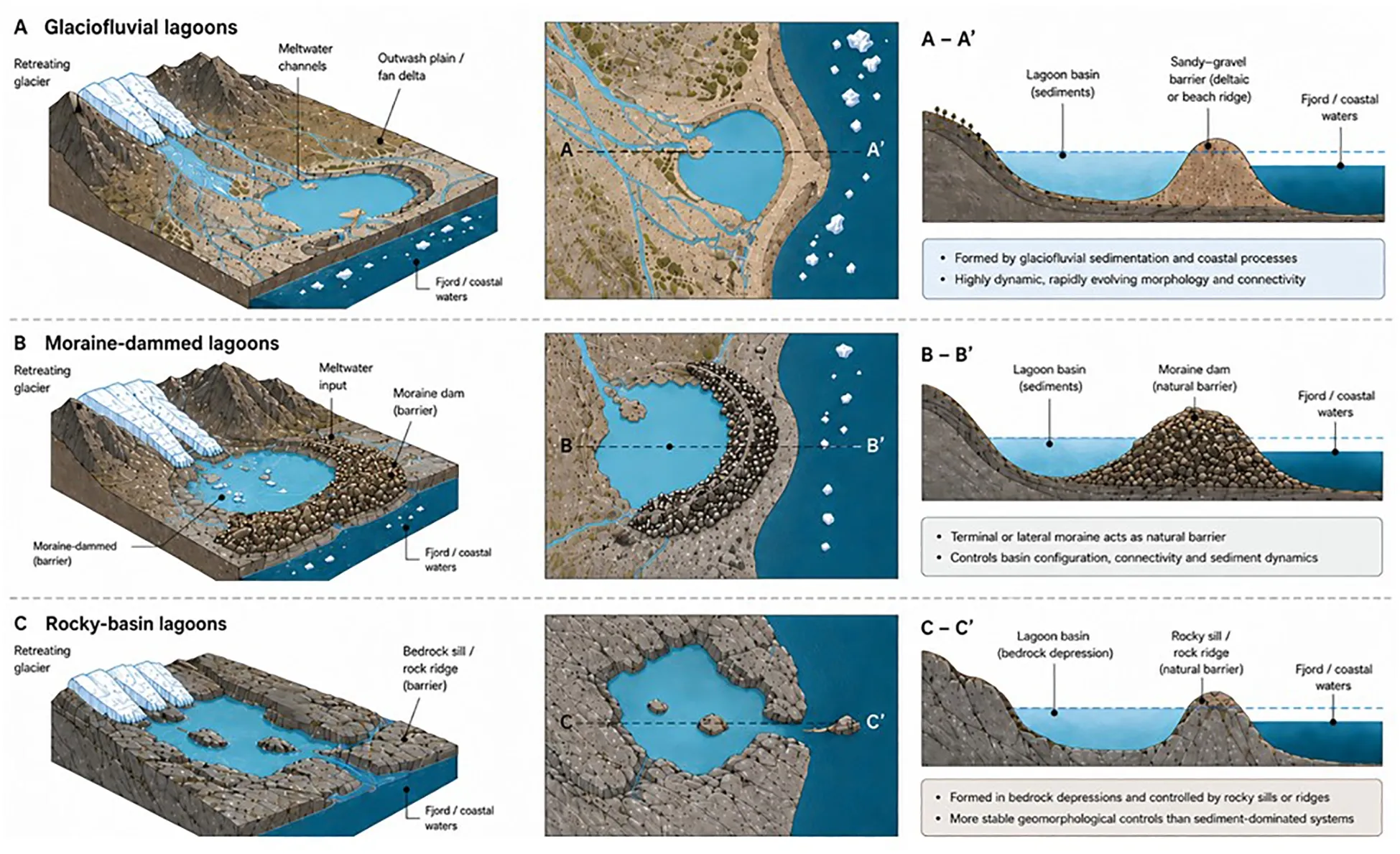
Schematic representation of the three principal types of paraglacial lagoons in Svalbard, classified according to their geomorphological origin and barrier structure: (A) glaciofluvial lagoons, formed by glaciofluvial sedimentation and coastal processes and separated from fjord or coastal waters by a sand–gravel barrier associated with an outwash plain or fan delta; (B) moraine-dammed lagoons, in which a glacier-derived terminal moraine acts as a natural barrier and controls basin configuration, connectivity, and sediment dynamics; and (C) rocky-basin lagoons, formed in bedrock depressions and separated from coastal waters by bedrock sills or rocky ridges, providing comparatively stable geomorphological control. For each lagoon type, the panels show, from left to right, an oblique landscape view, a plan view indicating the transect position, and the corresponding cross-section (A–A′, B–B′, and C–C′), Olenin et al. 2026.
The challenge: understanding change faster
There is also a practical problem: the Arctic is changing too quickly to spend weeks, months or years characterising every newly emerging ecosystems individually before moving to the next one. To understand change at a scale useful for regional predictions and climate models, we need ways to collect a large amount of complementary information quickly and consistently across many systems.
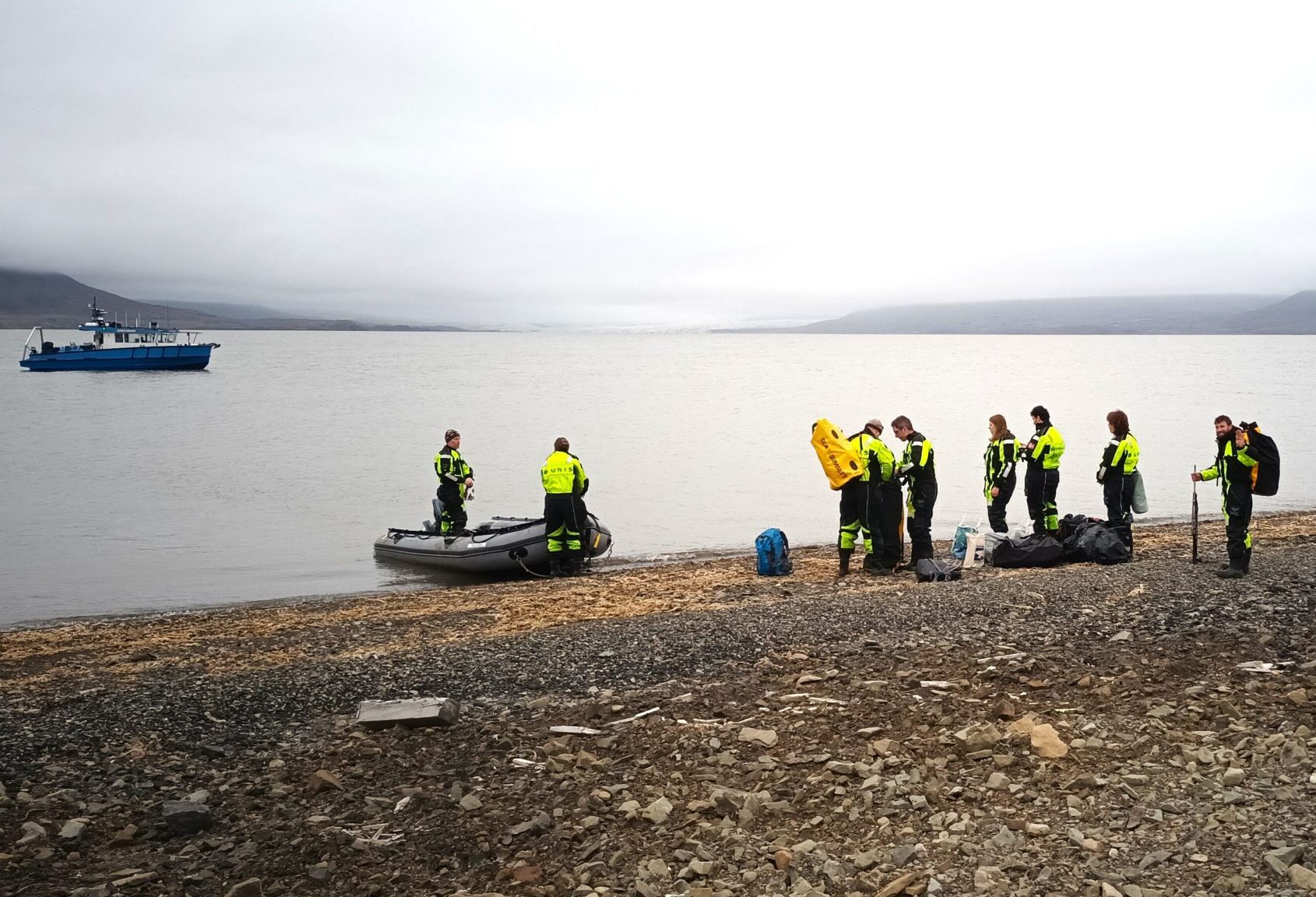
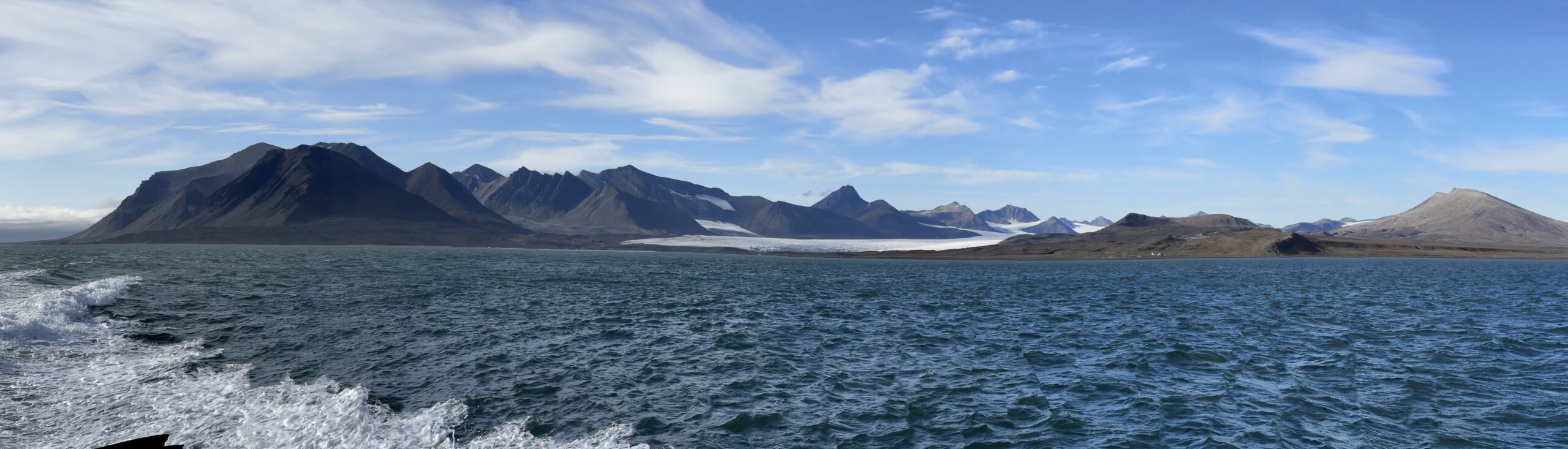
That was the idea behind our recent expedition to Valunden Lagoon in Svalbard, undertaken with collaborators from Klaipėda University, the University Centre in Svalbard (UNIS), Sequench Lithuania, the Norwegian University of Science and Technology and the University of Gothenburg. The aim of this blitz-campaign was quite ambitious – to obtain a meaningful whole-ecosystem snapshot of a paraglacial lagoon in essentially one intensive Arctic field day.
Rather than relying on a single monitoring method, the team combined complementary approaches to characterise:
- lagoon hydromorphology and connectivity
- water chemistry and biogeochemistry
- biological communities across multiple trophic groups
- exchanges between the lagoon, surrounding terrestrial waters and the adjacent fjord.
The survey combined uncrewed surface vehicles, robotics, remote sensing, rapid chemical measurements, conventional biological sampling and, of course, eDNA.
Together, these tools allowed us to cover essentially the entire lagoon, its surrounding glacial ponds, adjacent coastal waters and reference sites farther into the fjord during one coordinated sampling effort.
This is the type of integrated approach highlighted in our recent review as necessary for moving Arctic lagoon research from individual observations towards comparative datasets and eventually predictive models. Remote sensing can provide spatial context, autonomous platforms can efficiently map physical and chemical gradients, while eDNA and conventional biological sampling add information about the communities inhabiting those environments.
Rapid eDNA sampling across very different environments
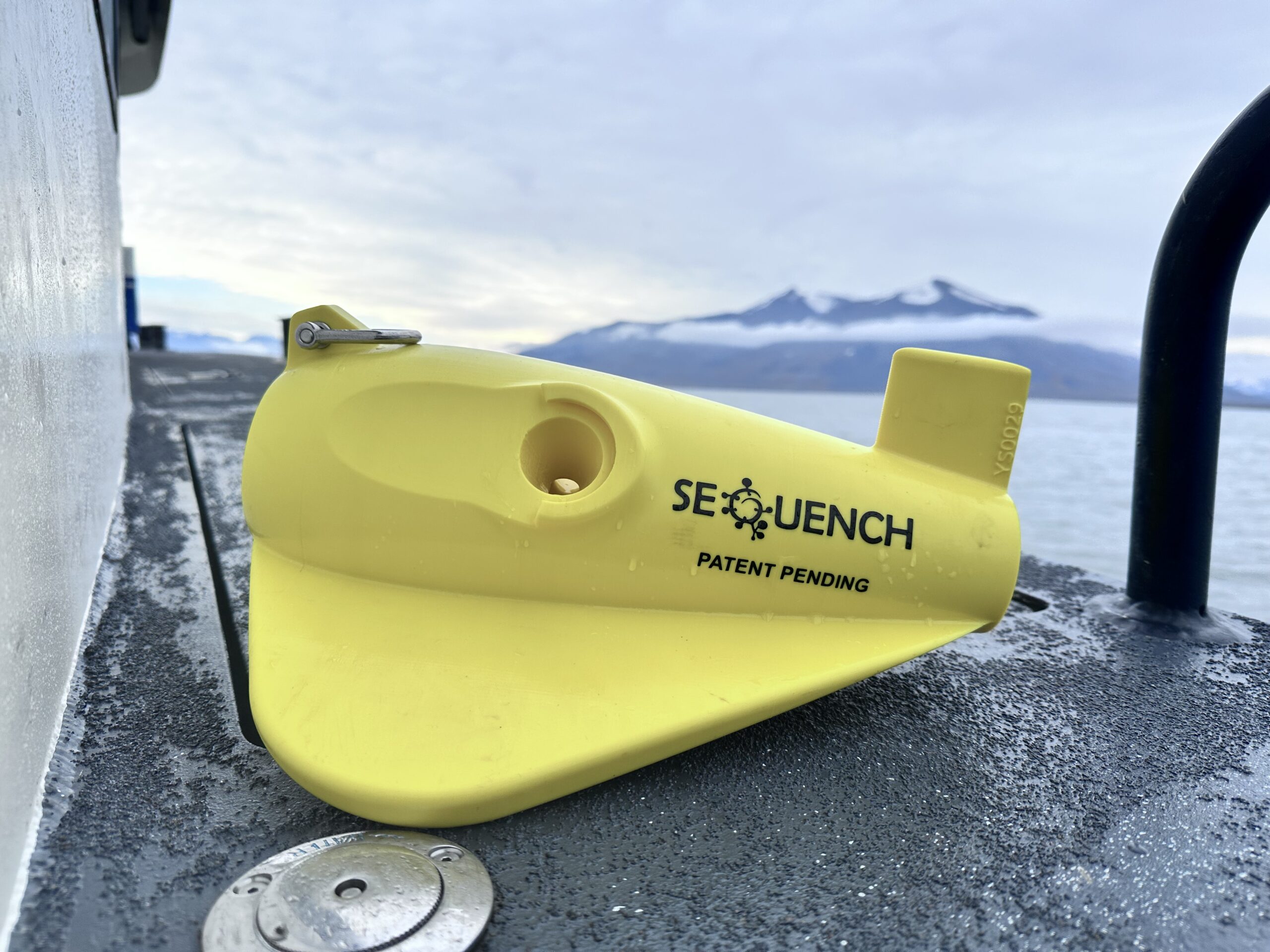
Sequench’s contribution centred on rapid, spatially extensive biodiversity sampling using two members of our eDNA sampling family.
Using the eQuip sampler, we collected water samples throughout and outside Valunden Lagoon from a small motorboat. Around three hours of sampling covered the major areas of the lagoon and adjacent coastal waters. Sampling was then extended into the outer fjord from a larger research vessel to provide reference locations beyond the immediate lagoon system.
For the small glacial ponds surrounding the lagoon, we used the Quad PK1 pump, which allowed four replicate eDNA filters to be collected simultaneously. Approximately 15 L of water could be rapidly concentrated onto each set of eQuip filters.
Speed is not simply a matter of convenience in the Arctic. Field operations are logistically demanding, weather windows can be narrow and polar bear safety requires dedicated observers and additional field procedures. Reducing the amount of time needed at each sampling location therefore has a very practical value.
The expedition also gave us an ideal opportunity to test 5 µm and 20 µm eQuip membranes across very different water types, from turbid lagoon and coastal waters to clear glacial ponds and outer-fjord sites. Our previous testing shows that both membrane sizes perform well, but the best choice depends on the ecological question. Smaller pores may be preferable for abundant microbial and microeukaryotic communities, while surveys targeting larger or rarer organisms may benefit more from maximising water volume and spatial coverage.
Valunden provided a useful real-world test of this trade-off within one highly variable system. The resulting dataset, spanning bacteria, microeukaryotes, metazoans and vertebrates, will help refine our recommendations for choosing filters under different environmental conditions and biodiversity targets.
From a one-day experiment to scalable Arctic monitoring
The Valunden campaign was deliberately designed as a proof of concept. It allowed the team to validate and fine-tune an interdisciplinary rapid-assessment approach ahead of larger-scale work, while simultaneously generating a detailed baseline across the major physical, chemical and biological components of the lagoon ecosystem. We have shown, that rapid assessment does not have to mean collecting less information. With the right combination of technologies, it can mean collecting different kinds of information simultaneously, across a much larger part of an ecosystem, and linking those observations from the outset.
This is particularly relevant in the Arctic, but the same principle applies well beyond it. Remote or difficult-to-access environments, rapidly changing coastlines, restoration sites, environmental impact assessments and large spatial monitoring programmes all face a similar challenge: how do we maximise the ecological information gained from limited field time?
For us, this is where eDNA sampling becomes most useful when it is treated not as an isolated analytical method, but as one component of a broader environmental observation system.
Our newly published review provides the broader scientific framework behind this work:
The paper synthesises current knowledge of Svalbard’s emerging lagoon systems and outlines a research roadmap combining physical observations, biogeochemistry, biodiversity, remote sensing, long-term monitoring and modelling to move from descriptive studies towards predictive understanding of these rapidly changing ecosystems.
Join Us in Advancing Research
Do you have an innovative idea or a research question? We’re always eager to collaborate with passionate individuals and organizations. Contact us today to explore how we can work together to bring your vision to life and make a lasting impact on our planet.