
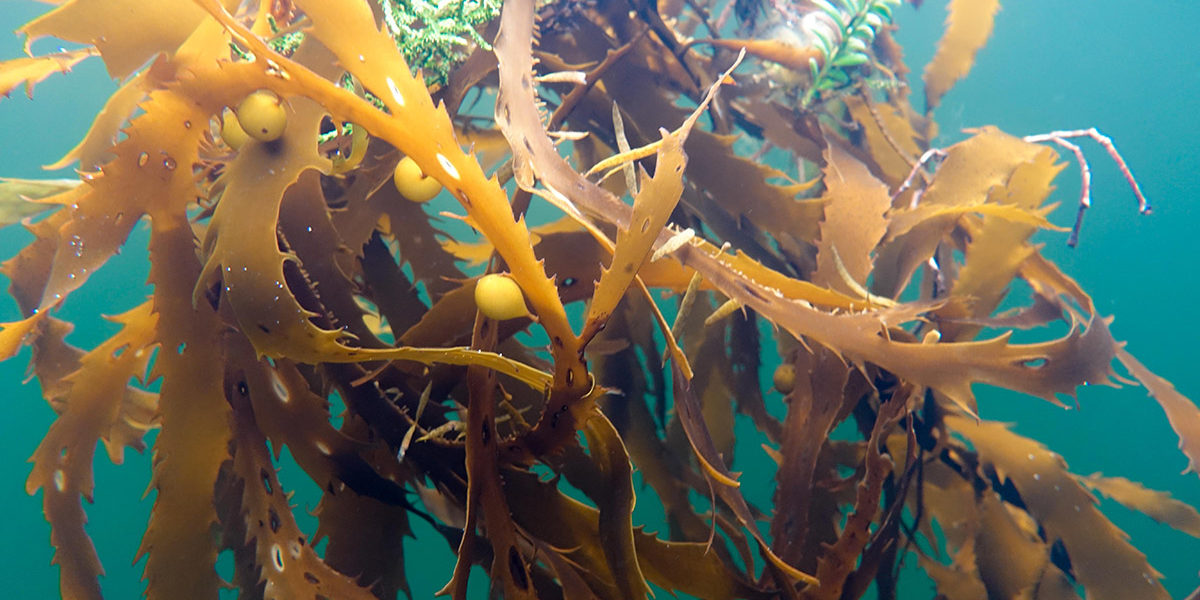
Kelp forests, often overshadowed by terrestrial forests and coral reefs in the global carbon cycle, play a crucial yet underexplored role in climate regulation. These vibrant underwater ecosystems, covering vast coastal areas, not only support marine biodiversity but also serve as significant carbon storage. However, despite their growing recognition as a natural solution for climate change mitigation, precise tools to measure their impact on carbon sequestration remain scarce.
Addressing the Knowledge Gaps with eDNA Technology
Current methodologies lack the precision required to fully understand the contribution of kelp forests to long-term carbon storage. This gap in knowledge is critical, as it limits our ability to quantify the true value of these ecosystems in combating climate change. Addressing this gap is not just a scientific challenge but a necessary step towards more effective environmental policies and conservation strategies.
Understanding kelp’s role in the carbon cycle is not only about tracking where kelp-derived carbon ends up. We also need to understand how kelp populations differ in their capacity to persist and function under changing environmental conditions, because the forests producing that carbon are themselves under increasing climate pressure.
In a collaborative project with Cawthron Institute, Kelp Forest Foundation, and NatureMetrics, we are pioneering the development of an innovative tool designed to assess contribution of kelp to carbon storage in marine sediments. This tool, utilizing advanced environmental DNA (eDNA) technology, represents a significant leap forward in marine science. By collecting and analyzing sediment samples, we can quantify and identify kelp DNA, providing a molecular approach for tracing kelp-derived material and improving estimates of kelp’s contribution to carbon stored in marine sediments.
Beyond Carbon Tracking: What Giant Kelp Genomes Can Tell Us
Our recent collaborative whole-genome study of giant kelp shows that kelp populations across the Pacific are far from genetically uniform. We identified strong genomic divergence between Central California and South Pacific populations, with very limited gene flow between them, as well as distinct patterns of genetic diversity and selection. Importantly, South Pacific kelp showed signs of positive selection in several genes associated with photosynthesis and carbon and energy metabolism. The study also uncovered regions of the genome that appear to act as reservoirs of genetic diversity, potentially contributing to the evolutionary capacity of kelp populations to respond to environmental change.
These findings matter for kelp restoration and climate resilience. They suggest that giant kelp from different regions represent distinct evolutionary lineages, and that choosing source populations for restoration or cultivation should consider their genetic background rather than treating all M. pyrifera as equivalent. Protecting genetic diversity may therefore be as important as restoring kelp abundance if we want resilient kelp forests to continue providing biodiversity and carbon-cycle benefits in a changing ocean.
Learn more from the published research paper here.
From Carbon Tracking to Climate-Resilient Kelp Forests
Together, molecular approaches that trace kelp-derived carbon and genomic approaches that reveal the diversity and adaptive potential of kelp populations can give us a much more complete picture of the role of kelp forests in a changing ocean. The successful implementation of the sediment eDNA tool could substantially improve our understanding of kelp’s contribution to long-term carbon storage. At the same time, genomic information can help ensure that kelp restoration and cultivation strategies maintain the evolutionary diversity needed for these ecosystems to remain resilient into the future.
Join Us in Advancing Research
Do you have an innovative idea or a research question? We’re always eager to collaborate with passionate individuals and organizations. Contact us today to explore how we can work together to bring your vision to life and make a lasting impact on our planet.